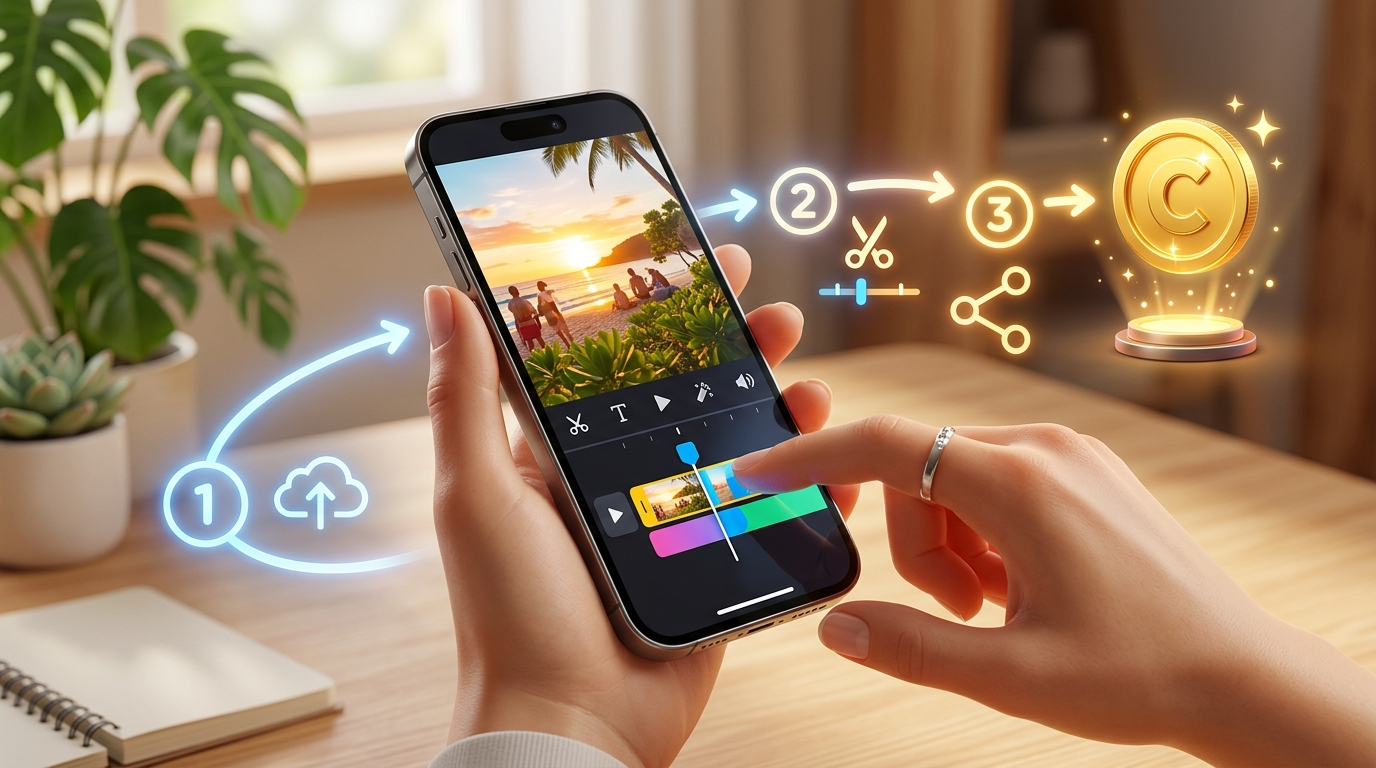
If you make money posting short clips, “is clipping legal?” is the right question to ask early. The honest answer is that it depends on one thing above all: whether you have the rights to the footage you are clipping. Clip content you are authorized to use and you are on solid ground. Repost someone else’s content without permission and you are taking on copyright risk. This guide explains the difference in plain terms.
Quick answer
Clipping is legal when you have the rights to the footage — for example, brand-provided or campaign-authorized content, content you own, or content a creator has given permission to clip. Clipping someone else’s content without permission can infringe copyright. The safe path is to clip only authorized footage, which is exactly how clipping campaigns work.
The short answer: it depends on rights and permission
There is no single yes-or-no answer to “is clipping legal” because clipping is just a technique — cutting a short piece out of a longer video and reposting it. Whether that is legal depends on who owns the footage and whether you are allowed to use it. The same edit can be perfectly fine in one case and a copyright problem in another, purely based on permission.
So the useful framing is not “is clipping legal” but “do I have the right to clip this specific footage?” If the answer is yes — because a brand gave you the assets, because you made the content yourself, or because the creator licensed it to you — you are in good shape. If the answer is no, you are relying on a defense like fair use, which is far less reliable than simply having permission. New to the whole concept? Start with what is clipping.
Copyright basics for clippers
In most countries, the moment someone records a video, that footage is protected by copyright and the creator (or whoever they made it for) owns it. You do not have to register anything for copyright to exist — it is automatic. That means a streamer’s VOD, a podcaster’s episode, a musician’s track, and a brand’s ad are all owned by someone.
Copyright generally gives the owner the right to control copying, editing, and redistribution of their work. Cutting a clip out and reposting it touches all three. So as a clipper, the key mental model is simple: unless the footage is yours or you have permission, someone else holds the rights to it. That is not a reason to panic — it is just the reason the source of your footage matters so much.
When clipping is legal
Clipping is on solid legal footing when you have a clear right to use the footage. The most common situations:
- Brand-provided or campaign-authorized content. When a brand hands you assets specifically so you can clip and post them — as in a clipping campaign — they are granting you permission to use that footage. The rights are cleared before you start.
- Content you own. If you filmed it, edited it, or otherwise created it yourself, you can clip it freely.
- Licensed campaigns and marketplaces. Platforms that connect brands and clippers exist precisely to make sure the footage clippers receive is authorized for that use.
- Explicit permission from the creator. If a streamer or creator tells you (ideally in writing) that you can clip and repost their content, that permission is what makes it legal.
The common thread is permission. In every one of these cases, someone with the rights has said “yes, you can use this.” That is the cleanest, lowest-risk way to clip.
When clipping is risky
Clipping gets risky the moment you use someone else’s content without their permission or a license. Some examples that commonly cause problems:
- Ripping clips from a streamer or YouTuber you have no relationship with and reposting them to your own account for views.
- Reuploading TV, film, or sports footage — these rights holders are often very active about takedowns and claims.
- Using copyrighted music over a clip without a license, which can trigger its own claims separate from the video.
- Assuming “credit” or a tag makes it legal. Crediting the original creator does not, by itself, give you the right to repost their content.
In these situations the rights holder can issue a takedown, file a copyright claim, or in some cases pursue legal action. That does not mean every unauthorized clip leads to a lawsuit — many result only in a takedown — but the exposure is real and it is entirely avoidable by working from authorized footage instead.
Fair use: the nuance
Fair use (and similar concepts like “fair dealing” in some countries) often comes up in clipping discussions, and it is widely misunderstood. The most important thing to know: fair use is a legal defense, not a blanket permission. It does not pre-authorize you to use someone’s content; it is an argument you may be able to make after a dispute arises, and whether it succeeds is decided case by case.
In the United States, courts weigh several factors — including the purpose of your use (for example, commentary, criticism, or parody versus straight reposting), how much of the original you used, and whether your use competes with or harms the market for the original. Transformative uses with real added commentary tend to fare better than verbatim reposts, but there are no guarantees, and outcomes are notoriously hard to predict. Outside the US, the rules differ significantly from country to country, so what might be defensible in one jurisdiction may not be in another.
The practical takeaway for clippers: do not treat fair use as a green light. If your whole strategy depends on a fair use argument holding up, you are taking on uncertainty. Clipping authorized footage sidesteps the question entirely.
How to clip safely
The safest approach is also the simplest: clip footage where the rights are already cleared. That removes the guesswork and lets you focus on making good clips instead of worrying about claims.
- Use clipping campaigns and marketplaces. On ClipAffiliates, brands provide authorized assets specifically for clippers to cut and post, so you are working with cleared rights from the start.
- Clip your own content, or content where you have written permission or a license from the creator.
- Keep records. Save the campaign terms, the brief, or the permission message so you can show where your footage came from.
- Check each platform’s rules before you post, since they layer their own requirements on top of copyright law.
Working from authorized assets is exactly what a clipping campaign is for. ClipAffiliates clippers clip brand-provided content, earn per API-verified view, and get paid in crypto after a 72-hour review window (a small 9% fee applies on payouts). If you are just getting set up, see how to start clipping, or for a niche walkthrough, read how to make money clipping streamers.
Platform rules: TikTok, YouTube and Instagram
On top of copyright law, every platform runs its own copyright system, and you have to follow both. Even if a clip would be fine legally, a platform can still remove it or penalize your account under its own policies.
- YouTube uses Content ID and a copyright-strike system; repeated strikes can lead to clips being removed, monetization issues, or channel termination.
- TikTok has its own copyright and music-licensing rules and will take down infringing content or mute unlicensed audio. “Is TikTok clipping legal?” comes down to the same thing as everywhere else: do you have the right to the footage, and does it follow TikTok’s policies?
- Instagram applies similar copyright rules to Reels, including audio and video claims.
Note that some platforms have built-in clip features (for example, native clip tools on streaming sites). Those features may allow clipping within that platform under its terms, but that does not automatically give you the right to reupload the clip somewhere else — permission and the destination platform’s rules still apply.
This is general information, not legal advice. Copyright and fair use vary by country and by the specifics of each situation, so if you are unsure about a particular clip or campaign, check the rights involved and consider talking to a lawyer in your jurisdiction.
Want to clip without the copyright worry?
Join clipping campaigns where brands provide authorized footage, then earn per verified view — no guessing about rights.
Clip Authorized ContentFrequently Asked Questions
Is clipping legal?
Clipping is legal when you have the rights to the footage — for example brand-provided or campaign-authorized content, content you own, or content a creator has explicitly given you permission to clip. Clipping someone else’s content without permission can infringe copyright, so the safe path is to clip only authorized footage. This is general information, not legal advice.
Can you get sued for clipping?
Posting someone else’s copyrighted content without permission can expose you to a copyright claim or takedown, and in some cases legal action by the rights holder. The risk is much lower when you only clip content you are authorized to use — brand-provided campaign assets, your own content, or footage a creator has licensed to you. If you are unsure about a specific case, check the rights and consult a lawyer in your jurisdiction.
Is it legal to clip Twitch or YouTube content?
It depends on permission and the platform’s rules. Twitch and YouTube each have their own clip features and copyright systems, and the original creator generally owns their footage. Reposting their content elsewhere without permission can lead to a strike or takedown even if a built-in clip tool exists, so the reliable approach is to clip content the creator or brand has authorized you to use.
How do I clip without copyright issues?
Clip only footage you have the right to use. The simplest way is to work from cleared assets — for example ClipAffiliates clipping campaigns, where brands provide authorized content for clippers to cut and post. You can also clip content you own or footage a creator has explicitly licensed to you. Avoid reposting other people’s content without permission, and check the rules of each platform you post to.